

Welcome to the Land of the Sun
Ah, Australia! Land of stunning beaches and relentless sunshine. But here’s the rub: that golden sun packs a punch with some of the highest levels of ultraviolet (UV) radiation on the planet, making UV protection in Australia a topic that affects all of us. In a country where two in three folks face a skin cancer diagnosis by age 70, slapping on a sun hat isn’t just advice—it’s a must-do!
This guide isn’t just about telling you to stay out of the sun; it’s about smart, stylish, and scientifically-backed ways to enjoy the great outdoors without the burn. So, let’s dive into the nitty-gritty of sun protection, from the role of UV radiation in skin damage to choosing the best sun-protective gear like wide brim hats and beach hats. Ready to beat the heat? Let’s go!
Key Facts:
- Australia has one of the highest rates of skin cancer in the world.
- Two in three Australians are expected to be diagnosed with skin cancer by the age of 70.
- Around 1,300 Australians pass away from melanoma each year.
- During summer, the UV index in Australia regularly reaches 11+ (Extreme), particularly in Queensland and the Northern Territory.
- UPF 50+ clothing blocks at least 98% of UVA and UVB radiation.
- AS/NZS 4399:2020 is the benchmark for sun-protective clothing and accessories in Australia and New Zealand.
Sources: Cancer Council Australia | Australian Radiation Protection and Nuclear Safety Agency (ARPANSA).
Understanding UV Radiation in Australia
To protect your skin, it helps to know a little about the different types of UV radiation. Australia experiences some of the highest UV levels in the world, and they're often stronger than those recorded in places at similar latitudes in the northern hemisphere. Clear skies, a sunny climate and our location all play a role, which is why sun protection is part of everyday life for so many Australians.
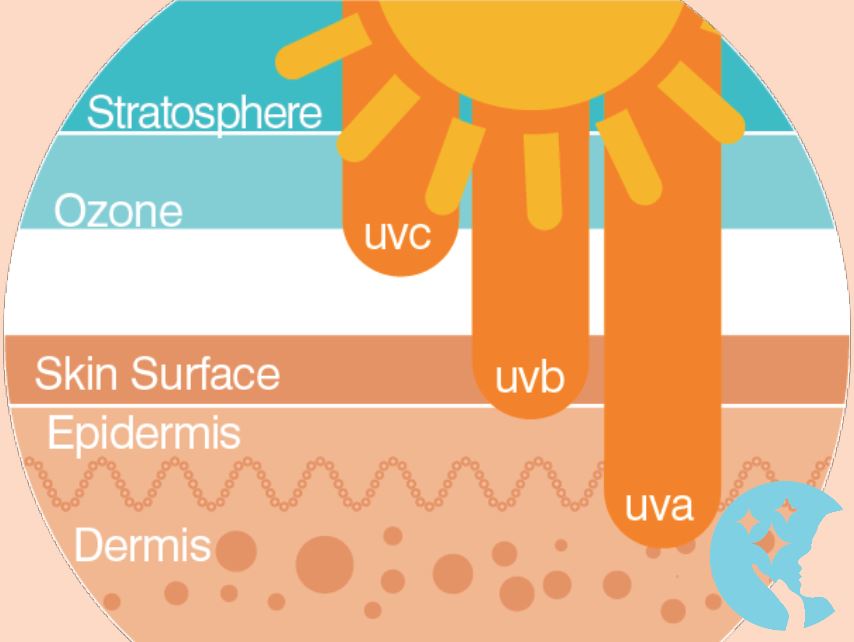
UVA Rays
UVA rays penetrate deep into the skin and are present year-round, even on cloudy days. They are a major contributor to premature skin ageing and can also contribute to long-term skin damage.
When it comes to UV protection in Australia, UVA rays are easy to overlook because they don't cause the immediate redness and discomfort associated with sunburn. Even so, regular exposure can add up over time, making daily protection a sensible habit.
UVB Rays
UVB rays affect the outer layers of the skin and are the main cause of sunburn. They can damage the DNA inside skin cells, which is why they are closely linked to skin cancer. These are the rays reflected in the UV Index in Australia.
During summer, it's common for the UV Index to reach ‘Extreme’ levels of 11 or higher. In practical terms, that means unprotected skin can burn quickly, even during everyday activities like walking the dog, gardening or spending time at the beach.
UVC Rays
UVC rays are the strongest type of ultraviolet radiation. Fortunately, they are absorbed by the Earth's atmosphere before they reach the ground. That means Australians don't need to protect themselves from UVC exposure outdoors. Instead, effective sun protection focuses on reducing exposure to UVA and UVB rays, which are present whenever you're spending time outside.
The Risks of UV Radiation
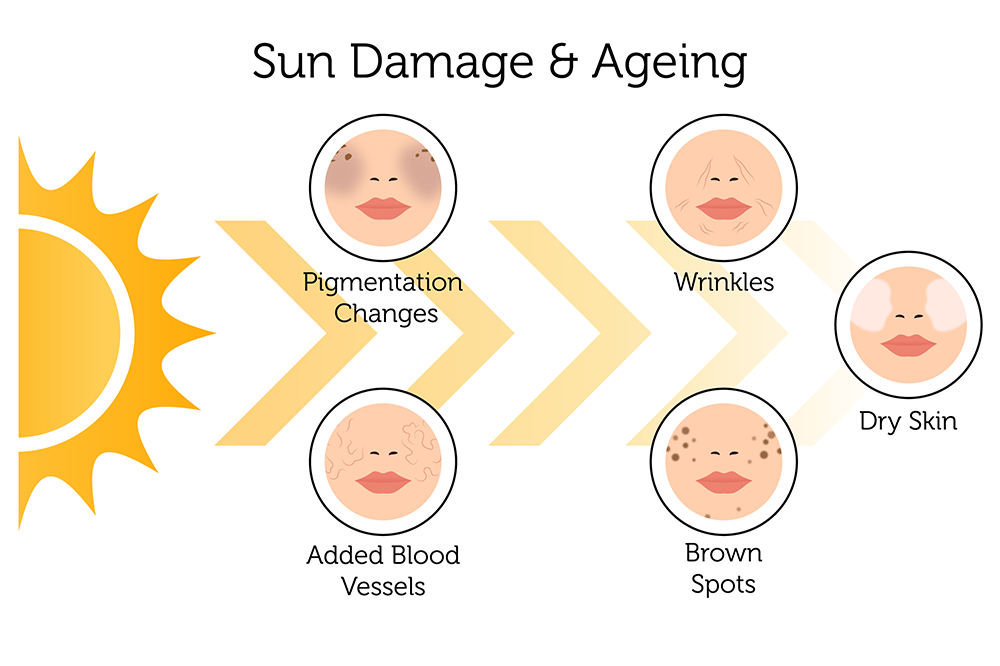
Overexposure to UV radiation can lead to:
- Sunburn
- Sunspots
- Skin cancer, including:
- Basal Cell Carcinoma (BCC): The most common and least dangerous, appearing as a lump or scaly area.
- Squamous Cell Carcinoma (SCC): Less common than BCC, can spread if untreated.
- Melanoma: The most dangerous type of skin cancer, appearing as a new spot or changing mole, which can spread if untreated. Annually, melanoma claims the lives of around 1,300 Australians.
To learn more about the risks of skin cancer, see the QLD Government’s health information page.
What Does UPF 50+ Actually Mean?
If you've been shopping for sun-protective clothes or hats, you've probably come across ‘UPF 50+’. But what does it actually mean, and how does it differ from sunscreen ratings?
UPF vs SPF: What's the Difference?
While the terms sound similar, they measure two different forms of protection.
- Sun Protection Factor (SPF) measures how well sunscreen protects your skin from UVB rays.
- Ultraviolet Protection Factor (UPF) measures how much UV radiation is blocked by fabric and physical barriers such as hats, clothing and shade products.
In simple terms, SPF applies to sunscreen, while UPF applies to the materials that help shield your skin from the sun.
Understanding the UPF Rating Scale
UPF ratings indicate how effectively a fabric blocks ultraviolet radiation.
- UPF 15-24: Good protection for everyday outdoor use.
- UPF 25-39: Very good protection, offering a higher level of UV defence.
- UPF 40-50+: Excellent protection for extended outdoor time.
So, What Does UPF 50+ Mean in Practice?
A UPF 50+ rating is the highest category recognised under Australian standards. It means the fabric allows less than 2% of UV radiation to pass through, blocking at least 98% of UVA and UVB rays. This level of protection is particularly helpful in high-UV environments, where we’re constantly exposed to the sun during everyday activities, such as walking, gardening, fishing, spending time at the beach or attending outdoor events.
Why Australian Standards Matter
The Australian and New Zealand Standard AS/NZS 4399:2020 is the recognised benchmark for assessing and classifying sun-protective clothing and accessories. Products tested to this standard undergo UV protection testing to confirm their performance.
When choosing sun-protective headwear, the best sun hats in Australia are those that combine a broad protective design with a certified UPF rating, helping you stay better protected every day.
OZ Smart's UPF-rated products are tested and rated to this standard, giving you confidence that the level of protection has been independently verified. The Cancer Council also recommends UPF-rated clothing as a first line of defence against UV exposure, alongside other sun-safe measures, such as seeking shade and applying sunscreen.
You can learn more about how our hats are UPF tested here.
Managing UV Risks
Given Queensland's highest global skin cancer rates, managing sun exposure is crucial. Both individuals and businesses should foster a sun-safe environment. Here’s how:
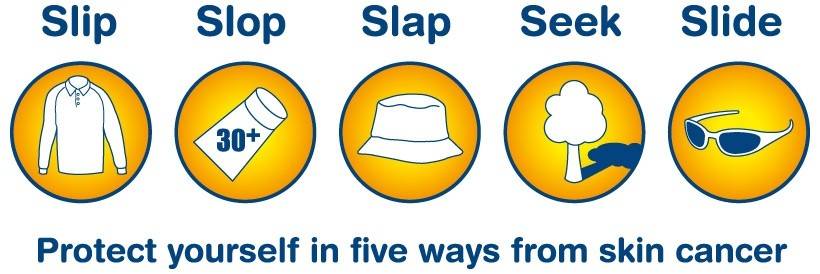
Launched by the Cancer Council in 1981, the "Slip, Slop, Slap" campaign taught Australians to:
- Slip on protective clothing
- Slop on sunscreen
- Slap on a wide brim sun hat
In 2007, the campaign was expanded to include "Seek" shade and "Slide" on sunglasses, emphasizing a holistic approach to sun protection.
Find out more at: 5 S's of Sun Safety - Slip, Slop, Slap, Seek & Slide | Cancer Council | Cancer Council
Need a few practical ideas for staying sun safe? Read our sun protection tips for beach days, walks, gardening and more.
Slip On Clothing
Not all clothing offers the same level of protection. To guard against UV radiation;
- Wear dark-coloured, closely woven fabrics.
- Choose sun protective arm sleeves, trousers, and collars.
- Opt for clothing with a high ultraviolet protection factor (UPF), as rated under AS/NZS 4399:2020.
Slap On Sunscreen
Sunscreen should be your last line of defence, used after shade, clothing, hats, and sunglasses. When selecting sunscreen:
- Choose SPF 30+ or higher.
- Ensure it’s broad-spectrum (protects against UVA and UVB).
- Make sure it’s water-resistant.
Proper application is key:
- Apply generously to clean, dry skin 20 minutes before sun exposure.
- Reapply every two hours.
- Use zinc cream for lips, ears, and nose for added protection.
Seek Shade
Shade is one of the simplest ways to reduce direct UV exposure, particularly during the middle of the day when UV levels are at their highest. However, shade alone does not block all UV radiation. Surfaces such as water, sand and concrete can reflect UV rays, increasing your exposure even when you're under cover.
When natural or built shade isn't available, portable options such as sun umbrellas can provide extra protection at the beach, sporting events, and outdoor settings. Pair shade with protective clothing, sun hats, and sunscreen for more complete sun protection. If you're heading to the beach, practical items like sand-free beach towels can make long days outdoors more comfortable.
Slide On Sunglasses
Wraparound styles conforming to AS/NZS 4399:2020 offer the best protection. Check for an eye protection factor (EPF) of 9 to 10 for optimal UV protection. Keep in mind that polarised lenses reduce glare but do not increase UV protection.
Slap On a Hat
One of the most effective sun protection tips is also one of the simplest: wear a hat whenever you're spending time outdoors.
- Choose the right style: Wide brim hats are a popular choice for beach days and coastal conditions, offering generous coverage.
- For outdoor activities: Legionnaire style hats provide added protection around the neck, making them a practical option for trails and camping.
- For everyday wear: Bucket hats offer reliable coverage in a casual, easy-to-wear design for walks, gardening and daily activities.
- Check the brim width: For adults, a brim width of 10-12cm provides excellent coverage for the face, ears and neck. For children, aim for a brim width of at least 6-7cm.
- Look for a UPF rating: For extended outdoor exposure, choose hats rated UPF 50+ for maximum sun protection.
- Prioritise fit: Adjustable sizing and chin cords can help keep your hat secure during windy conditions.
- Consider comfort: If you regularly wear your hair up, ponytail hats offer a more comfortable fit while still providing coverage.
From beach days to backyard gardening, OZ Smart's range of UPF 50+ hats offers practical protection for time spent outdoors. Browse the full collection here.
Don't Miss These Areas
Commonly overlooked areas prone to sunburn include:
- Ears: Cover up and apply sunscreen on and behind them.
- Eyelids: Use category 3 sunglasses and a wide brim sun hat.
- Hairline and Hair Part: Protect with a wide-brim UPF rated hat.
- Back of Neck: Wear collared shirts, apply sunscreen and wear a legionnaires neck flap hat.
- On Top of Feet: Reapply sunscreen after water exposure, seek shade.
- Under Straps: Apply sunscreen beneath straps and clothing.
- Back of Arms, Legs, and Underarms: Wear sun-protective clothing and apply sunscreen.
OZ Smart: Tailored for Australian Customers
OZ Smart is committed to providing sun protection solutions that meet the unique challenges of the Australian environment. Here’s what our customers have to say:
-
"My all-time favorite hat. Very protective and love the wide brim. Really comfortable, I wear it all the time!" – Sarah, Australia, 27/04/2024 (OZ Smart Legionnaires Ponytail Hole Sun Hat)
-
"This is my new favorite hat. I have bought it in all three colors and bought the cream one for my mother." – Sheree Halliwell, Australia, 17/01/2024 (OZ Smart Floral Extendable Wide Brim Hat)
-
"I'm very impressed with this hat. It fits well, and the ponytail hole is in the right spot. The material feels sturdy and is fairly waterproof. I deliberated for a while before purchasing and am now very glad that I did." – Charlotte Newland, Australia, 26/02/2024 (OZ Smart Wide Brim Ponytail Hole Sun Hat)
-
"Love the hats. They have good coverage, feel awesome on, and would highly recommend." – Elizabeth Cortolezzis, Australia, 20/03/2024 (OZ Smart Wide Brim Bucket Hat)
-
"Bought this for my son, a resident of Port Hedland, WA. He has always complained that he could not buy a hat BIG ENOUGH to fit his BIG HEAD. But guess what! This one does, and he was VERY HAPPY! For a die-hard fisherman, I hope it brings him luck!" – Vivian Peta, Australia, 11/01/2024 (OZ Smart Big Head Extra Wide Brim Sun Hat)
-
"Great hat! The wide brim is perfect for fishing, crabbing, and gardening, plus it’s light and lets the air through!" – Chris Downie, Australia, 01/02/2024 (OZ Smart Lightweight Legionnaires Work Hat)
-
"Ordered two of these hats on Christmas Eve, not expecting them to be delivered until after New Year, but much to my surprise, they were shipped on Boxing Day and delivered on the 29th. Very impressed with the hats, lightweight, great fit, and fantastic coverage. Would definitely purchase again. Thank you, OZ Smart!" – Amanda Webb, Australia, 29/12/2023 (OZ SMART Legionnaires Fishing Sun Hat)
In a country where UV radiation levels are among the highest globally, sun protection is essential. OZ Smart offers the wide brim bucket hats and knowledge you need to protect your skin while enjoying outdoor activities. Remember the key principles: Slip on protective clothing, Slop on broad-spectrum sunscreen, Slap on a wide-brim hat, Seek shade, and Slide on quality sunglasses. Trust OZ Smart for reliable, stylish, and effective sun protection solutions. Stay safe, stay smart, and enjoy the Australian sun with confidence.
Content Disclaimer
This blog provides general information about sun protection. It is not a substitute for professional medical advice. If you have any medical concerns, please seek professional advice.